Battle for the Peñas de Kaiat
Morocco, 19th
August 1923 by Richard Baber
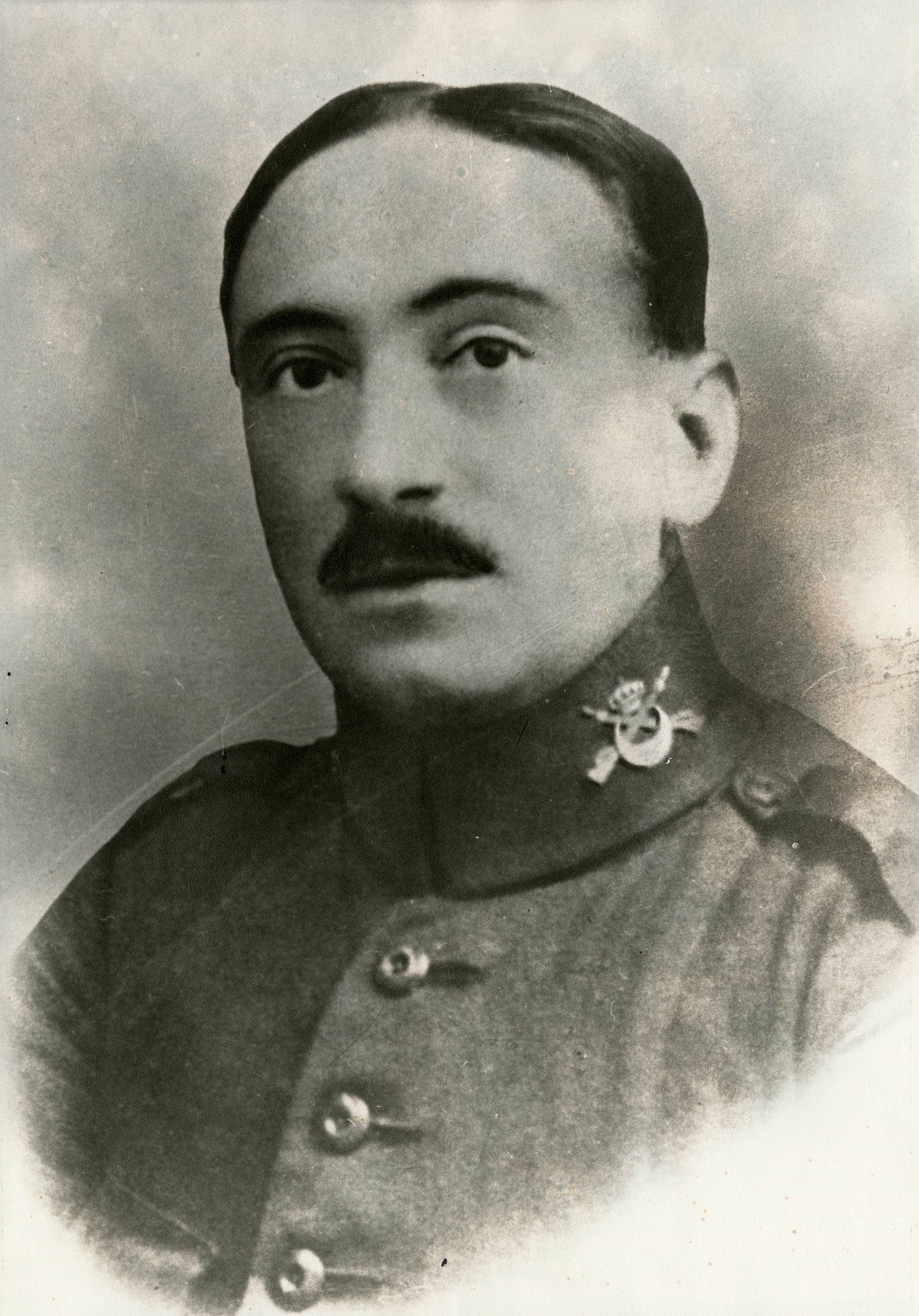
Comandante Benigno Fiscer Tornero (OC I Tabor, Grupo Regulares de Tetuán)
The first battalion of Regulares was formed on June
30th 1911, under the command of Col. Damaso Berenguer (who later in August 1919
would become High Commissioner to the protectorate) The battalion was made up
of native troops under Spanish officers were modelled on similar units created
by the French. This unit was titled: Grupo de Fuerzas Regulares Indigenes de
Melilla No1, (literally 1st Fusilier Regiment of Natives from Melilla). The
battalion consisted of four companies of infantry and a squadron of cavalry
scouts. By the next year the strength had increased to six companies of
infantry and three squadrons of cavalry.
NCO from Grupo Regulares de Tetuán
(Tetuán units wore the blue sash)
The Regulares took part in many of the major battles
across the protectorate and were highly regarded by their officers for the
bravery and skills. It is with this "high regard" in mind we find that
of the five Grupos de Regulares that served in the protectorate only one Tabor
(battalion) was ever awarded the Collective Military Medal (Spain`s second
highest decoration). The action by the Tabor also resulted in more citations
for individuals than any other Regulares unit in a single action. What follows
is a brief account of the action which led to the awards and some ideas of how
to recreate the action on tabletop.
Background
In early 1923, the Spanish military have withdrawn
from large parts of the protectorate though they tried to hold a solid line of
defence from the sacred city of Tetouan and along the Wad (river) Lau. For the
most part Abd el Krim`s forces are mostly in the Eastern Zone, but there have
been several major (and costly) engagements including Coba Darsa during
June-July. It was along the Wad Lau that Grupo de Regulares d`Tetuán No1 found
itself with four (4) Tabors (battalions) of infantry and one of cavalry. These
units occupied strong-points and blocaos (blockhouses); escorted supply
convoys or carried out patrol activities. Unfortunately the prolonged
inactivity by the Spanish military made Abd el Krim bolder and he attempted to
expand his rebellion into Yebela in the Western Zone by sending harkas (war
bands) to attack Spanish positions, etc. This was part of a two-fold strategy -
attack the Spanish and keep his own warriors busy whilst at the same time
spreading notice of his own power (baraka) into and among the Yebela tribes.
In early 1923, the area of Yebela remained calm and
the Spanish finished the construction of a proper road that connected Tetouan
with Xauen. A serious attempt at a treaty by the High Commissioner, which
included a pact on behalf of the Government with the Raisuni, provides a time
of relative tranquillity in this part of the Western Zone.
In the months of March and April Abd el Krim, who
had the intention of extending his fight to the western zone and winning the
support of the Yebela Kabyles, violently attacked M'Ter's post several times - Abd
el Krim referred to this position as "the Door of the Western zone"
this is quoted in several international newspapers of the time. During the
month of May Riffi aggression steps up all along the Wad Lau Valley, causing the
Spanish to carry out transfer more troops to the area. The military situation
of the Spanish troops continued to be unravel with groups of warriors from
local kabyles (previously neutral or even friendly to the Spanish) began to
attack speculative targets. Some positions felt themselves more in a state of
siege than simply security/police posts.
Meanwhile,
in the region of Gomara in June, an attack was being prepared on the city of
Xauen and at the end of the month the brother of Abd el Krim leads an attack on
the position of Tazza which, in accordance to the tactics usually employed by the
guerrillas of the Rif, had been attacked without rest by the harkas day and
night. Supply lines to forward positions were cut and the need for a re-supply
mission became critical to break the siege but the Minister of State did not
authorize its shipment not to upset negotiations with The Raisuni by flooding
his area of control with more Spanish troops! The High Commissioner
decided nevertheless to send the convoy without prior notification to the
Government once again demonstrating a breakdown in communications between the
Spanish authorities in Morocco and those of the Madrid government.
In August 1923 negotiations with the Raisuni had
reached impasse and the military situation is aggravated by the pressure of the
harkas on the more advanced positions of the line Wad Lau - Xauen - Wad
Lucus. The general uprising in the Western Zone escalated with the arrival
of a large harka led by Ahmed Heriro (one of Abd el Krim`s top
field commanders) which increased the number of raids and actually cut
communications between Tetouan and Xauen. There were also uprisings in the
area of Larache much further west. The whole of the Yebela was now in a
state of general rebellion pressing the Spanish forces on all fronts.
Soldado Grupo Regulares de Tetuán
The
Battle
In this period of heightened tension and increased
military action, bases and outposts still had to be re-supplied and their
garrisons rotated. 1st Group of Regulares d` Tetuán were assigned to the River
Lau section of the front throughout July and were fully committed to convoy
escort, garrison and outpost duty.
On August 16 news reaches the Spanish of enemy
movements which threatened communications between the vital positions of Talambot and Adgos and a column was formed to cover
the area.
Under the
command of Commander Fiscer (officer commanding I Tabor of the Group of
Regulars of Tetuán No1)
His
command is composed of:
I Tabor
de Regulares de Tetuán
1º
Squadron of Cavalry of the Group of Regulares of Tetuán
10
charges of the Mobile Ammunition Park
Medium
Section of the Mountain Ambulance
After a
couple of days of searching for the enemy with no result, so on 19 August the
column was returning to base when it approached the heights known as Peñas de
Kaiat, where scouts reported an enemy presence. An attempt by a company from I
Tabor to set up an observation post was countered by enemy fire, other Riffi
began firing upon engineers constructing a better track near the rocks.
Commander
Fiscer with the rest of the Tabor moved forward only to find a large number of
the enemy, strongly entrenched; whose intention was to form a strong blocking
position and cut the Road between Taguesit and Tazza and intercept
communications with Adgos.
Commander
Fiscer gives the order to halt the Taguesit column and for all available forces
to occupy the most dominant point on the high ground and to attack the
enemy. He reinforces the most advanced company with four machine guns to
secure and hold the enemy's centre while the other two companies supported by
four machine guns from 3rd Legion Bandera which was stationed at Adgos,
moved to attack the Flanks.
The
battle progressed, with two companies of the Tabor assaulting the crests where
the enemy was entrenched, the fighting was intense and the enemy only finally dislodged
after vicious hand-to-hand combat! The actions of I Tabor is well supported by
the companies of 3rd Bandera and other units of Regulares and the Tercio
deployed on the flanks to the east and west.
The enemy
consisted of a force of 200 to 250 men, well dug-in and hidden in many of the
caves in this rocky outcrop. Thanks to the rapid dispositions made by
Commander Fiscer, his command without any artillery preparation and using rapid
movement and a decisive, almost reckless assault, surprised and overcame the
enemy.
Given the
number enemy troops and their excellent positions, which allowed them to pour deadly
fire on the attackers. The decisive and prompt action of the Commander and the bravery
and speed of which his men carried out their assault reduced the casualties considerably
from what would have occurred if the assault had been allowed to falter! Also
by the Tabor relatively quickly occupying enemy positions, the possibility of the
enemy bringing up more men and reinforcing the blocking position was
neutralized, all this without artillery support! In fact the only support the Tabor
received was by its own machine guns and those provided by 3rd
Legion Bandera and of course the advances made by those supporting units both
Regulares and Legion.
During the
fighting, Commander Fiscer kept moving up and down the line, giving and
providing clear and accurate orders, this helped his mens morale and
contributed to the success of the attack.
At 1700
hours on 19 August the Spanish forces established and fortified a post 200
meters west of the massif. Equipped with 8 machine guns of the 3rd
Bandera and 1 Section of rifles, this position provided cover fire allowing
those forward elements of I Tabor and of the Tercio retreat step by step
towards Adgos. Such a withdrawal under fire whilst in direct contact with
a skilled and determined enemy could easily lead to a disaster, but once again
Commander Fiscer demonstrated his command abilities taken personal control over
the withdrawal which was handled with great skill by the entire command.
Due to the
exemplary nature of how they performed during this action, I Tabor was awarded
the Collective Military Medal by Royal Order on February 16, 1924.
The I
Tabor casualties of this day were four Officers and twenty-six Troops killed
and three Officers and thirty-three Troop wounded.
Collar badge of I Tabor
Individual Award winners
Comandante
Benigno Fiscer Tornero (OC I Tabor, Grupo Regulares de Tetuán)
Capitán
Carlos Muñoz Güi (OC 2nd Company, I Tabor)
Capt. Güi (mounted) with his company
Teniente
Fernando Herrero de Tejada y Francia (1st Coy. I Tabor)
Teniente
Manuel Peñarredonda Samaniego (2nd Coy. I Tabor)
Teniente Samaniego
Teniente
Celestino Ruiz Sáenz de Santamaría (3rd Coy. I Tabor)
Sargento
Domingo Chao Martín (2nd Coy. I Tabor)
Sargento
Fernando Relimpio Carreño (3rd Coy. I Tabor)
Cabo
Ceferino Santamaría Pérez (1st Coy. I Tabor)
Grupo
Regulares Indígenas de Tetuán nº 1 today has the title - Grupo Regulares de
Ceuta nº 54 and I Tabor, Grupo Regulares de Tetuán survives today as - Tabor
"Tetuán" I / 54.
The scenario
Obviously
this is a fairly straight forward attack/defence over rocky terrain, with the
Spanish forces first trying to clear the high ground then dig in against
possible counter attacks. I decided to cut the table in two with a winding
rough road representing the track between Taguesit and Tazza.
Objectives
Riffi –
the Berbers must keep the road closed for 20 turns, if they manage this they
gain a strategic victory, if they fail but break or destroy any attacking
Spanish units this should be considered a tactical win.
Spanish –
the Spanish forces must clear the Peñas de Kaiat and open the road for the supply
column within 20 turns to win, no other result is acceptable.
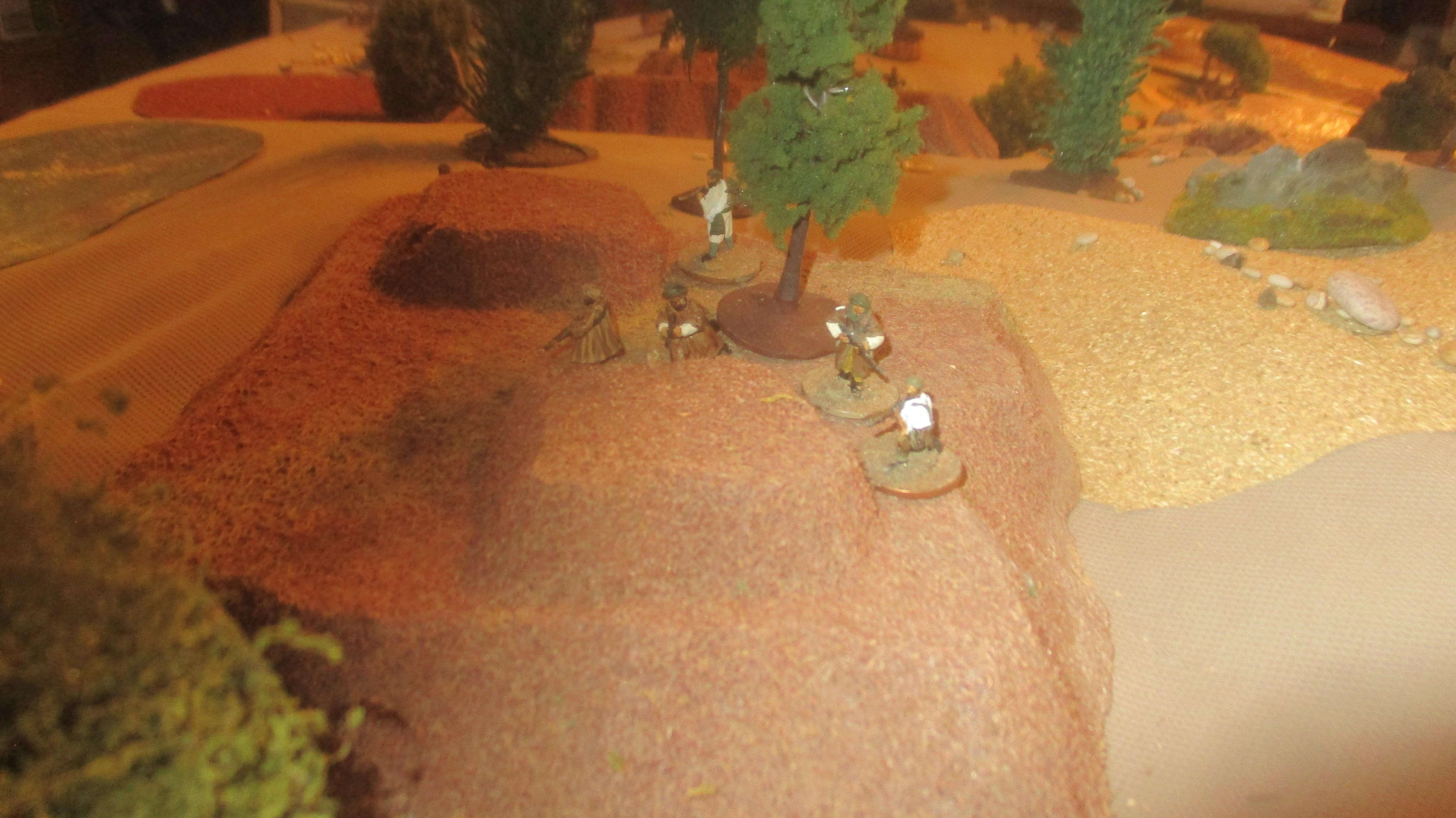
My table
Forces
Now my
first problem is I don`t own enough Regulares to field an entire Tabor on
tabletop, so I was forced to compromise and give 3rd Bandera of La
Legion a bigger role. I decided the Regulares would attack the left side of the Peñas whilst
the legionnaires attacked the right.
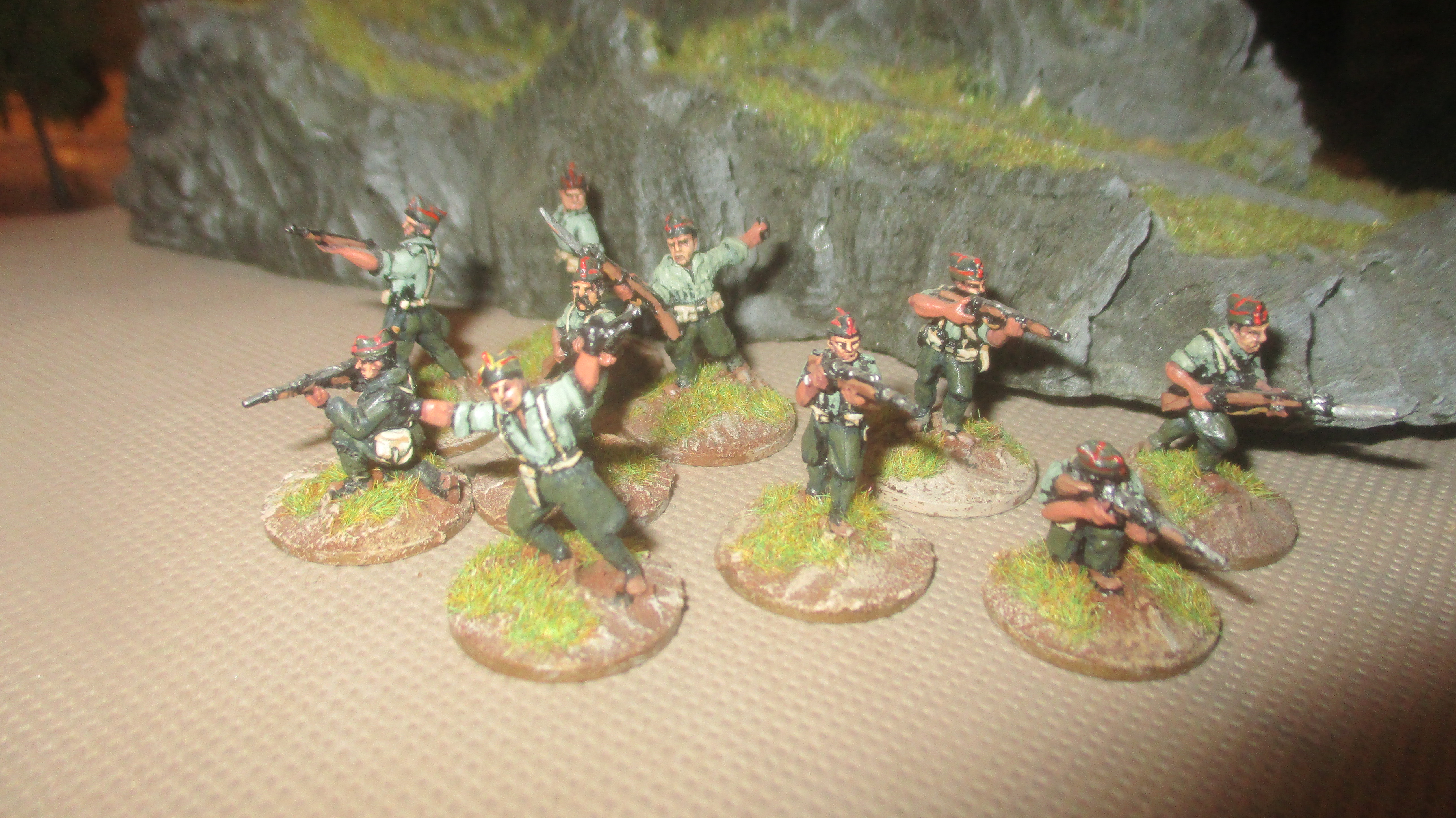
I Tabor, Grupo Regulares de Tetuán No1
My Regulares are a mix of Bandera, Irregular, Barcino
& Tumbling Dice
2 companies each with:
2 x 10 man Pelotónes + HQ
Machine
gun Pelotón
3rd
Bandera Spanish Foreign LegionNow all these except one of two more recent additions were painted by Matt Slade Painting Services at a time when I was getting a few articles published in Miniature Wargames but had no time to paint my own stuff.
My
Legionnaires are a mix of Irregular, Bandera, Barcino and Barcelona Universal
Models
HQ
3 x 10
man Pelotónes (each has an LMG)
Machine
gun Pelotón
Riffi
Harkas
My Riffi are from all over the place - Irregular, Bandera, Italeri, Airfix, Early War Miniatures, Blitz, Force20, Shellhole Scenics
Can be
dug in (medium protection) or hidden from view at the start of the game
Right
hill
4 x 10
warrior Hamsein (all armed with rifles, swords, knives, etc)

Left hill
3 x 10
warrior Hamsein (all armed with rifles, swords, knives, etc)
Reinforcements
on turn 10
1-3 10
man Hamsein
4 LMG
team
5 Juramentados (men sworn to die in
battle) armed only with close combat weapons attack a random Spanish unit and
fight until destroyed
6
10 man Hamsein with inspired leader (adds +1 to all morale/combat rolls to all
with command radius)
The
game
Saw
the Regulares on the left and 3rd Bandera on the right with the
Riffi waiting among the hills
3rd Bandera
1st Tabor
Riffi
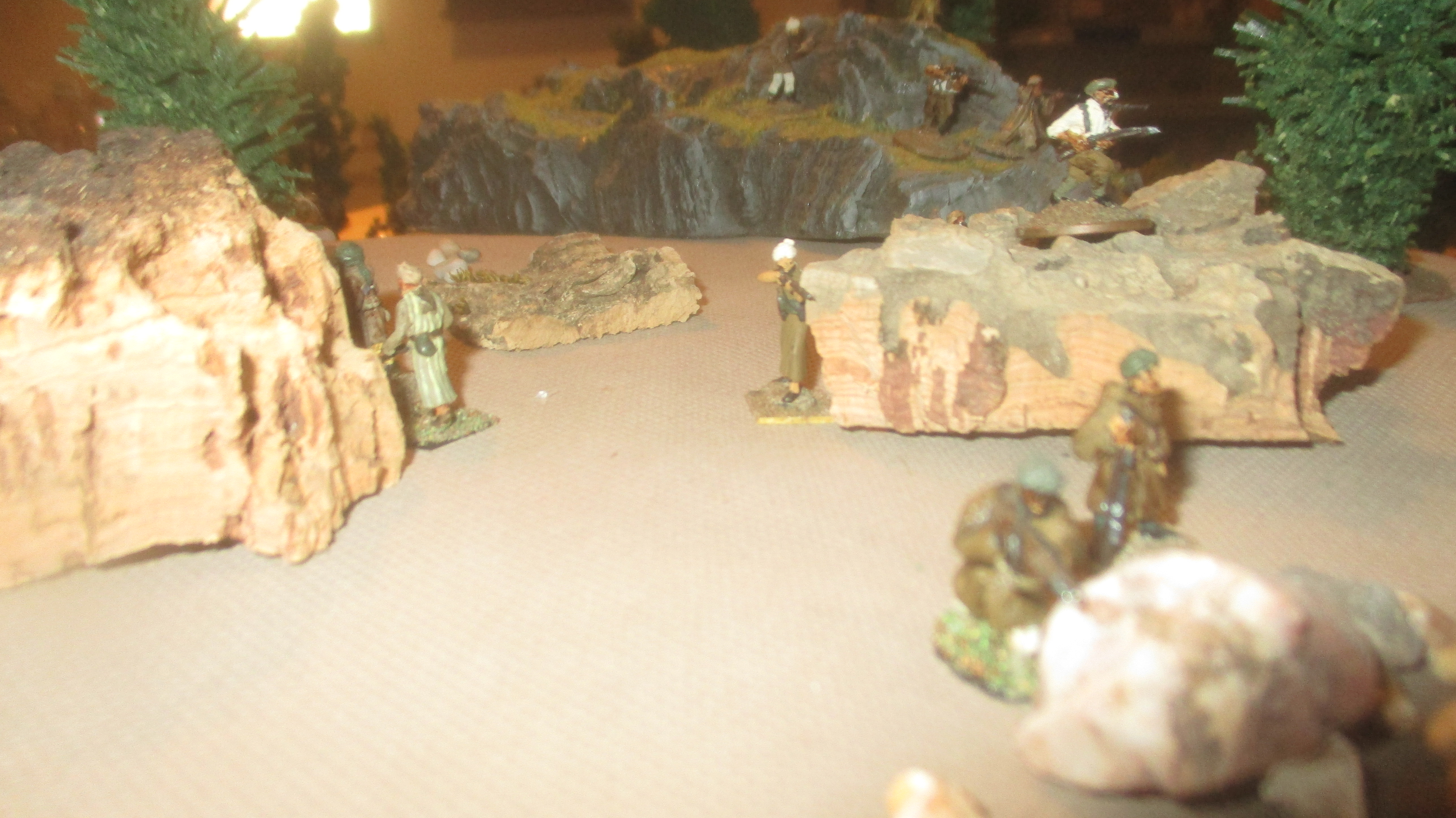
What followed was 11 turns of
painful advance against a determined enemy, who used the terrain to slip around
the flanks and attack when the opportunity presented. The Legion and Regulares
advanced in leaps, one platoon covering the next all supported by their machine
guns which also leapfrogged to keep up with the advances and continue their
support.
Legion pack mule carrying an MMG
moves up towards the next firing position
One Regulares platoon moved
straight down the track throughout the game, this brave move effectively
outflanked the Berber defence plan on its own!
The rest of the Tabor took to the heights to root out the
enemy

On the right the Legionnaires
performed splendidly
Finally fighting on the left
concluded in an epic and confused melee with the Regulares victorious
Once they defeated the immediate foes the Regulares dug in to
defend the track
On the right the Legion gained the
heights and fortified them with their MMGs
A very different game, all
infantry with no artillery. Casualties on the Spanish side were far higher than
the historical battle – lucky dice!! But they still had the organisation and
command to react and counter the Riffi defenders; of course they also had the
machine guns which allowed them to lay down suppressing fire from a distance allowing
their infantry to get close and clear stubborn enemy positions.