Showing posts with label TO&E. Show all posts

Sunday, 29 March 2026

13e Régiment de Dragoons 1944/45 (a photo of S-35 Shere Khan and an image of 19e RD at Lorient added 29/03/2026)

13e Régiment de Dragons 1944/45

My attention was drawn to this interesting late war unit by an odd photo which popped up on a French modeling group I follow of Facebook. The photo (below) was of a Somua S-35 accompanied by French soldiers in 1940 era kit, yet titled April 1945! It turns out The Free French had gathered up any repairable and reusable 1940 tanks they could find as the Allies advanced through France and built these into fighting units to use against the isolated German pockets left behind along the coast of France! Being a pack rat for knowledge about unusual french units and liking the idea of having my Somua back on the tabletop I did some digging, what follows is brief article/background based on some weeks of internet research.

13e Régiment de Dragons was an old cavalry regiment and had gone to war in 1940 with Somua S-35 and Hotchkiss H35/39, the unit lost about 90% of its tanks and was eventually disbanded.

During the Allied advance across France following D-Day, recovery teams had gathered any serviceable or salvageable French tanks together at a depot outside Paris. 13e RD was reconstituted in Orléans on October 15, 1944, into a composite regiment with Somua S-35s, B1-bis and Hotchkiss H35/39 tanks abandoned by the Germans and originating from the Somua factory, the Rueil workshops, the Gien depot, or the Normandy front.

These tanks were then either refurbished or canibilized for parts; all completed vehicles were then re-equipped with ER51 transceivers to ensure communications. A first squadron was then formed with 16 Somua tanks, and a second followed with 17 B1-bis tanks. It appears from the B/W photos I found across the internet the tanks were left in whatever camouflage scheme they came in, be it Wehrmacht or French, some tanks have large white stars added or French tricolor roundals to aid identifiaction and cover up German balkenkreus on recovered vehicles. 

 After a brief period of instruction, the 1st Somua squadron left Orléans for Cognac, and was placed at the disposal of the FFO (Forces Françaises de l'Ouest). It joined the La Rochelle front and was stationed at Lonlay on January 2, 1945.

Organisation

Under Chef d’Escadrons Georges Lesage, the 13e RD was authorized 20 officers, 90 NCOs, and 500 men, with a HQ squadron and one squadron each of S35s (1st Sqn, Capt. d’Aboville), B1bis (2nd Sqn, Cpt. Voillaume), and H35/39s (3rd Sqn). Support was a mortar battery on half-tracks, an over-sized recovery and repair troop, and truck-carried engineer and medical platoons.

1st Somua squadron included 17 Somua tanks operational in February 1945.

Note that the S35 on the far right still sports the unchanged original observation cupola. The four remaining vehicles were modified by the Germans with cut-off split hatch cupolas.

Command tanks: Belebuth & Bandar

1st platoon : Atlas, Bacchus (no 1001615), Hercule, Titan, Vulcain

2nd platoon (Lt. Bertoleaud): Mowgli (no 1001609), Shere Khan (no 1001619), Raskha (no 1001620), Baloo, Baghera

3rd platoon (Aspirant Olier): D'Artagnan, Aramis (no 1001604), Athos, Porthos, Myladie

2nd Char B1 bis Squadron

Captain Edmond Voillaume

Captain Edmond Voillaume's 2nd Company of the Free French Forces B1 tanks

Had three platoons of 5 tanks each plus a command tank and a reserve. the tanks were named after famous French battles, Generals or places, I only identified a few: Arcole (no 19), Bayard, Abbeville, Dugueclin (no 3), Lorraine (no 03), Vercors (22), Britany 

1st platoon Lt. Philippe Naud 

2nd platoon Lt. Orval 

3rd Platoon Lt. Breton

I have been unable to find information on the 3rd (Hochkiss) Squadron, it certainly doesn`t appear in any of the action reports around Royan, but these photos are of H39s serving with the sister regiment 12e RD in Lindau, Germany in May 1945. They appear to have been repainted US olive with recognition stars liberally applied, if you wish to field 3rd Squardron on 13e RD I`d paint them up the same way. 


The regiment was not to be deployed on the frontline where they could possibly bump into a Tiger or Panther, but rather in an infantry support role against isolated pockets of German holdouts along the French Atlantic coast that had been bypassed in the advance across Western Europe. They took part in the siege of La Rochelle, The Battle of Royan, and the assault on Pontaillac. Grueling reduction operations against desperate and cutoff men where the object was a daily squeeze until the pocket was no more. The unit is noted for taking part in the operation of clearing out Royan (Operation Vénérable) and two Somua were ferried across to assist clearing the Island of Oléron (Operation Jupiter). 

What follows are excerpts from AAR and regimental diaries:

The unit saw its first action on March 1, 1945, at Saint-Jean-de-Liversay.

The French 114th Infantry Regiment under Col. Prou (former maquis) were stationed in sub-sector 2, the Vérines area. The II.Abteilung (Major Scholtz) of the Marine Regiment Zapp launched a surprise attack towards Saint-Jean-de-Liversay, which caught the unprepared and less than field trained 114th ID cold! The Germans broke through the French cordon and some French units were routed (the 2nd Company was surrounded and annihilated). The village of Saint-Jean-de-Liversay was occupied by German lead elements before the French were able to regroup. 

The 3rd Battalion of the 4th Zouaves, the 3rd Squadron of Spahis (armoured cars and light tanks), along with 1st Squadron of the 13e RD were dispatched to the scene to block the German advance. The Zouaves and the 2nd Platoon of the 13th Dragoons recaptured the village of Grand Beauregard after a fierce battle, while the other two platoons attacked Luché and Sourdon. These gains stabilized the front and allowed other French units to regain the initiative. 

13e RDs Somua's first engagement was a success.

On the Royan front

The 2nd Squadron of the 13th Dragoon Regiment arrived at Jonzac station on April 2nd with its seventeen B1-bis tanks from Orléans and established itself at Cravans. Meanwhile, the 1st Squadron of the 13th Dragoon Regiment, stationed at Mauzé, was transferred to Saint-Genis-de-Saintonge on April 3rd with its sixteen Somua S-35 tanks, before moving to Saint-André-de-Lidon.

On April 14, the 1st Squadron of the 13th Dragoons, part of the Southern Group, was engaged in support of the units of the Frugier Sub-Group. It participated in the attack on the German outposts in the Semussac sector, Bois de la Chasse and Château de Didonne, and then fought in the Musson and Toussaugé sector, taking the German outpost line from the rear in conjunction with the Faulconnier Sub-Group. The 1st Battalion of the 50th Infantry Regiment advanced at 6:35 a.m. towards Semussac, which was quickly reached with the support of the Somua tanks.

On the 15th, the Faulconnier Sub-Group was to take the villages of Boube and Le Peu with the BM2 and BM5 marching battalions, supported by B1-bis tanks of Captain Voillaume's 2/13th RD, which had been stationed in the Chay area since the previous day. Despite German resistance, the objectives were achieved. The BM2, still supported by a platoon of B1-bis tanks, continued its advance towards Didonne. At the entrance to the village, Lieutenant Philippe Naud, commanding the support platoon of B1-bis tanks, was killed by a burst of automatic fire. Every pocket of resistance was engaged by the B1-bis tanks, and during this engagement, the "Bayard" tank was hit by an 8.8 cm Pak shell, which set it ablaze. Part of the crew managed to escape. Nevertheless, enemy fire killed and wounded several men, and Lieutenant Orval, who commanded the B1-bis platoon, was mortally wounded by a booby trap. After the capture of St-Georges-de-Didonne by the Bigorre battalion and the BM2-BM5, the B1-Bis were placed in reserve at the Moulins de Didonne. Meanwhile, the Somua tanks of the 1/13th RD remained in reserve all day near Les Brandes in the Southern Group sector.

On the 16th, the Somuas of Captain d'Aboville's 1/13th RD received orders at 4:30 PM to place themselves at the disposal of the 3/4th Zouaves. An hour later, they arrived as reinforcements. Two platoons of Somua were committed to capturing the German command post in the Bois de la Métairie (Stop 31). One of the platoons then opened fire on the enemy bunkers. The resistance, initially stiff, quickly weakened under the armored fire. The position was finally occupied at 6:30 PM. The bunkers were cleared, and eighteen officers, including Korvettenkapitän (MA) Franz Seim (Michahelles' chief of staff), and one hundred and twenty men were captured. The attack continued at 7:30 p.m. towards the sea, and the two Somua platoons reached the coast at 8:00 p.m. northeast of the Pontaillac cove, encountering some resistance in the Golf Hotel sector. The two platoons fired on houses occupied by the enemy, while the third platoon moved to the left, from where it fired on Fort du Chay, which continued to hold out despite the attacks. At 9:45 p.m., the tanks no longer able to operate in the dark, the 1/13th RD moved to the Casino for the night. Meanwhile, the B1-bis, in conjunction with the BM2, cleared the last pockets of resistance in the Royan park area. The B1-bis also cooperated effectively with this same battalion to annihilate the German positions at Pointe de Vallières. The automatic weapons positioned at the point were also neutralized with the tanks, and fifteen prisoners were captured after fierce resistance.

On April 17th, the Somua squadron of the 13th Dragoon Regiment, which was to join the Médoc front, was withdrawn from the sub-group in the morning and replaced by the B1-bis squadron, which moved to the railway station. That same day, strong armored support provided by B1-bis tanks from Captain Voillaume's 2/13th Dragoons arrived at 10:45 AM to take part in the attack on the Admiral's Command Post at Pontaillac. The Breton Platoon, on the left, would attack the objective from the west, while the Escoffier Platoon, on the right, would attack it head-on. The operation began at 11:15 AM, immediately provoking a serious and effective enemy reaction. Encountering anti-tank obstacles and mines, the B1-bis advanced cautiously, followed or preceded by the infantry. A mortar and several machine-gun nests were destroyed by artillery fire. The noose tightened around Rear Admiral Michahelles' command post. Gradually surrounded by riflemen of the 3rd Battalion, 4th Zouaves, the position weakened. At 12:45 PM, a white flag appeared, and the first envoy presented himself to Lieutenant Breton, commander of the 2nd Tank Platoon. The first German soldiers and non-commissioned officers began to evacuate the initial shelter. Shortly afterward, a second envoy presented himself to Captain Voillaume to announce Rear Admiral Michahelles' surrender. The latter then emerged from his command post with his staff officers.

Here ends the action of the 13th Dragoon Regiment in the Royan pocket. The B1-bis squadron sent to the La Rochelle front was only involved in secondary actions at Aigefeuille and Thaire. The 13th Dragoon Regiment did not enter the city until May 8, 1945, and participated in a grand parade for the enjoyment of the locals. 

On April 22nd, General de Gaulle reviewed the troops who had participated in the fighting, including the 2nd Squadron of the 13th Dragoons, the only one available for the parade, as the 1st Squadron was being transferred to the Médoc region to help clear that area and then participate in Operation "Jupiter III" (the attack on the Île d'Oléron).


On the Pointe de Grave front
On April 18th, reinforcements from the Royan front finally arrived in the Médoc region after a long rail journey from Bordeaux. The 1/13th Dragoons (Somua S-35s), under Captain d'Aboville, were assembled at Grayan on the former airfield. They would be quickly committed to the front to support the infantry.
To the west, the RMME (Moroccan Marine Infantry Regiment) and Captain Olivaud Adan's Atlantic Commando advanced north of the Amélie River towards Soulac, following five Somua tanks of the 1/13th Dragoons, which led the way. During this advance, the S-35 "Shere Khan" struck a mine and was immobilized. Facing Wn 313, commanded by Staff Sergeant Werner, the French were halted by machine-gun fire. For nearly an hour, the strongpoint defended itself with desperate energy before being overwhelmed by the combined action of the Moroccan Battalion, the Atlantic Commando and the four remaining Somuas. After the capture of Soulac, the squadron assembled for the night at the Dartial stadium.
Note the crew are dressed in mle 1941 uniforms

On the 19th, the 131st Infantry Regiment of Lieutenant-Colonel Durand was immobilized facing the batteries of Arros and Huttes closing the isthmus, and therefore the only road access allowing access to the Pointe de Grave. At 11:00 AM, several Somua tanks from the 1/13th Dragoons were dispatched towards Les Huttes to support the 13th and 14th Companies' assault on the battery at Les Huttes (5./MAA618), commanded by Oberleutnant MA Helmut-Horst Molle. However, the Somua tanks were unable to locate the two remaining usable 8.8 cm guns (the other two had been damaged by bombardment) and thus could not effectively support the infantry attack. In the afternoon, a second attack succeeded in breaking through the strong-point at Les Huttes. After fierce fighting, the battery finally fell to the 13th and 14th Companies, supported by 1/13th Somuas, clearing the way to the front. Oberleutnant MA Helmut-Horst Molle was killed in these battles. But the Arros battery still held, and it was imperative to capture it. To put an end to it, a simultaneous attack from all sides was decided around 7:00 PM. To the south, the Moroccan Battalion (II/RMME), advancing along the beach, struggled to break through the minefields. In the center, the Mixed Foreign Battalion (II/RMME) and the Gernica Battalion (I/RMME), following the axis parallel to the railway line, advanced under cover of the dunes and pine trees towards Arros. To the southeast, Second Lieutenant Hurel's 11th Company, supported by a platoon of Somuas, launched an attack on the position, but upon reaching the railway line, the tanks were stopped by the embankment, which formed a natural obstacle in front of the battery (one of them struck a mine). Nevertheless, the company drew fire from the German defenders, positioned atop the dune, whose machine guns mowed down anything that moved. This action allowed the Gernica battalion to launch an assault on the position, capturing the trenches on the ridge to the south. Meanwhile, to the east, the 13th and 14th companies, reinforced by Captain Hulot's commando unit, approached the battery by crossing the railway line opposite the supply depots of Stp 307. Caught in German machine-gun fire, the fighting became fierce, and a second platoon of Somuas was required to quell the defenders' ferocity. At 8:30 p.m, the last defenders surrendered to the French troops.

On the 20th, the last German position of Verrier Saint-Nicolas (Wn 305) still resists, while the troops at the tip have already surrendered, led by Oberst Prahl, commander of the pocket.
Unable to silence Wn 305 with aerial bombardment, the Somua tanks of the 1/13th Dragoon Regiment and the M10 tank destroyers of the 1st RSM (Spahis) were deployed, firing towards the position, but this had no effect on the concrete fortifications. Negotiations and above all, a signed act of surrender by Oberst Prahl were required before the last defenders surrendered. 

Operation Jupiter III, the attack on the Île d'Oléron

A force of French Commandos and Marines supported by ex-maquis and ample naval and air support landed at Gatseau Beach on the island by LCI, DUKWs and a flotilla of fishing vessels on April 30th and began a systematic operation to clear the island and its forts. 

Five Somua S-35s of 1/13e RD were earmarked to land in support and give direct assistance, but a lack of suitable landing barges meant that eventually only two commanded by Lieutenant de Chalembert were ferried over to the island, transported by special pontoons built by the 92nd Engineers! These two tanks did give much needed support to the marines and commandos, helping suppress German positions. After two days of hard fighting the island was cleared except two isolated forts.

This marked the end of the 1/13th Dragoon Regiment's war.#

Losses of the 13th Dragoon Regiment during the campaign: two Somua tanks of the 1/13th Dragoon Regiment lost out of sixteen engaged, namely the "Shere Khan" (destroyed by a mine on April 18th on the Amelie road) and a Bacchus (blown up on a mine on April 19 north of Soulac), and one B1-bis tank from the 2/13th Dragoons lost out of seventeen engaged: "Bayard" (destroyed by an `88 on April 15 near Saint-Georges de Didonne).

At the end of the war, September 1944, the regiment, assigned to the 3rd Armored Division, was part of the occupation forces in the Palatinate, and in April 1946, the 13th Dragoon Regiment was disbanded in Witllich.

Additional stuff
This image popped up on the same Facebook page, but the poster was clearly just guessing as he labelled it 12e RD at Royan! I pointed out that:
"A" That 12e RD were NOT at Royan! and
 "B" These were R-35 tanks

Turns out after a bit of search the photo was taken a Lorient and the unit the tanks belonged to was actually 19e Regiment de Dragons. The tanks are photographed entering the city`s suburbs after the surrender on May 10, 1945.


Monday, 9 June 2025

Groupe de Tabors Marrocains

Groupe de Tabors Marrocains


First off I am not claiming to be an expert and what I post below shouldn`t be considered gospel, this is the results of a fair bit of reading both online and various publications. My purpose here is to give some ideas and explain how I built a Goumier Tabor in 20mm for my tabletop.

If we start with the basics, bear in mind orbats and actual numbers of soldiers vary depending on who you read! 

Each  Goumier Tabor (battalion) had between 800 and 1,000 men (with about 80% of these being Moroccan) consisted of:

3-4 Goums (companys) with about 200 men, each with:

Three infantry sections (platoons) with between 40 and 60 men

A command element

Support weapons platoons

A mounted Recce section

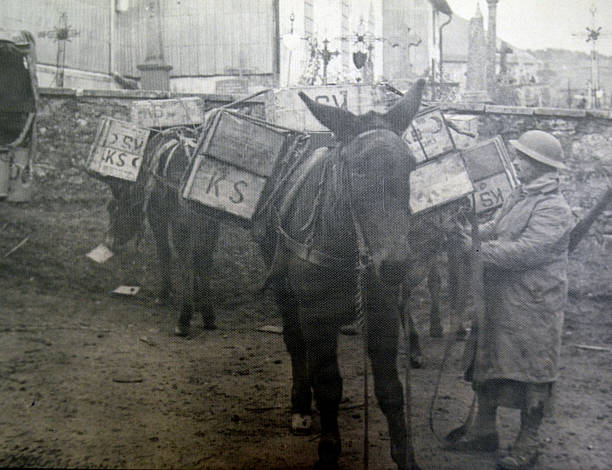
A mule supply train 

Three Tabors were grouped together into a Groupe de Tabors Marocains (GTM) consisted of roughly 3,000 men. This GTM had a command/support element - Goum de Commandement et d`engin (GCE) of roughly 300 men with:

HQ and comms team

A protection and pioneer unit

A mounted recce platoon

An anti-tank (I would assume Bazookas) and mortar platoons

Supply train with horses and mules (some trucks and Jeeps in Italy and NWE too).

Four GTMs were grouped together as an equivalent light infantry brigade Commandement des Goums Marocains (CGM)  

Historically things of course seemed to have varied, as an example 4th Tabor under Captain Verlet left Tunisia for Sicily on 5 July 1943 with:

58 French officers, 678 Berbers, 117 horses and 126 mules

For general reading particularly for those using 15mm I highly recommend visiting: 

https://balagan.info/stevens-goumiers-for-crossfire-a-moroccan-tabor-in-italy

A great general overview and some orbat info can be found here:

http://pdbgg240.free.fr/index.php?page=goums

A great thread and discussion on the subject of Goumier orbats can be found on TMP here:

http://theminiaturespage.com/boards/msg.mv?id=405219

Figures and availability in 20mm

First thing we have to consider is figures and availability, now I`m quite lucky to have been collecting for long time. But today there are only a few manufacturers producing Goumiers in our chosen scale -

Strelets (pack M151)

Raventhorpe do an 8-figure pack of Goumier in "Kelly" helmet (Pack SPEC25)


Irregular Miniatures do a couple of SCW Regulares in djellabah 


EWM do some dismounted French Spahis 

Which with a suitable head-swap (these heads are Raventhorpe) will blend in as Goumier. 


Thinking more outside the box, 
Strelets do another set - Foot Rif  Rebels (set 185), some of which could be used to bulk up your units. Obviously only those armed with modern rifles (no Jazzails 😏) are suitable, and the bedouin head-dress is totally unsuitable for Berbers, but this set could add another 6-8 poses, I would trim away swords myself also.


EWM also do some WW1 British Indian Cavalry in greatcoats
 with a little work with a sharp blade and a paint job, at 4ft across a tabletop these could also supplement your force, these include a horse packed LMG team.
These are painted up as Moroccan 7th Division for Tunisia but you get the general idea
It occurs to me also EWM French colonial infantry in greatcoat with Rexa (truban) heads and a little work with a sharp blade could also be painted up as Goumier!

Now because I`ve been collecting for a long while I have Goumier from ranges no longer available or at least more difficult to obtain - Blitz (Battlefield Miniatures), Friend or Foe (Shellhole Scenics), Force20 and Retrokit

Friend or Foe Goumier list

FRE 1. MOUNTED FRENCH OFFICER IN KEPI

FRE 2. 2 FRENCH OFFICERS IN KEPI, NATIVE N.C.O & RADIO OPERATOR

FRE 3. 4 GOUMIERS ARMED WITH LEE/ENFIELD RIFLES

FRE 4. 4 GOUMIERS ARMED WITH STEN GUNS

FRE 5. 2 GOUMIERS WITH DRAWN KNIVES, 1 CLUBBING WITH RIFLE & 1 THROWING GRENADE

FRE 6. BREN GUN TEAMS. 1 TWO MAN TEAM ADVANCING, 1 TWO MAN TEAM FIRING

FRE 7. 2 INCH MORTAR TEAMS, 1 TWO MAN TEAM ADVANCING, 1 TWO MAN TEAM FIRING

FRE 8. VICKERS M.M.G & 3 CREW

FRE 9. GOUMIER LEADING 2 MULES WITH PACKED VICKERS

FRE 10. GOUMIER LEADING 2 MULES WITH PACKED TARGENERAL STORES

FRE 11. 3 INCH MORTAR WITH 3 CREW

FRE 12. GOUMIER LEADING 2 MULES WITH PACKED 3 INCH MORTAR

Figures two and three have been modified by me


Grenade thrower modified


Blitz list French 1st Army Moroccan Goumier 1944/45
To my shame I only ever bought rifle armed figures without helmets - Stuart was very kind and just supplied me with these so I could use them as Rif War era Berbers; though I also buy the Hotchkiss MMG team (the loader got a head-swap). Later on I bought the radio/command set to add much needed comms to my Moroccan 7th Division troops.

BG1
Officer pointing with Sten
NCO kneeling with Sten and grenade
Rifleman running
BG2
Rifleman standing firing
Rifleman advancing
Rifleman walking
BG3
FM gunner firing
Rifleman advancing
Rifleman skirmishing
BG4
Rifleman kneeling firing
Rifleman walking
Rifleman skirmishing
BG5
NCO with Thompson advancing
NCO with Sten gun firing
BG6
Radio man kneeling with Sten
Officer kneeling with binoculars
Rifleman/messenger advancing
BG7
81mm mortar and 3 crew
BG8
Hotchkiss heavy machine gun and 2 crew
BG9
Mule handler and 2 mules carrying assorted baggage
BG10
Mule handler and 3 mules carrying assorted baggage
Blitz pack BG6 
Note I pruned away the RTOs Sten and replaced it with a rifle


Retrokit from France
Produce a couple of odd packs of Goumier in resin - not the crispest or nicest castings, but one can`t always be choosey


The officer is from Shellhole Scenics


Force20 
Produced a couple of packs of Melhala (Spanish irregulars) The figures were nice (if a little small for 20mm), the weapons are very crudely sculpted.

Here I swapped out the Hotchkiss for a nicer more detailed gun.

Building a Goumier Tabor in 20mm


If we first look at Rapid Fire! (be it RF1, RF2, or RFR) , a Goumier Tabor is basically a light infantry battalion so each Tabor would have:

HQ element

 3 off 8-10 figure companies

And support company with:

1 x MMG, 1 x 81mm mortar and a supply/transport unit with mules

My Tabor

Now as most readers will know I don`t play RF as written, I tend to lean more towards its grandfather - Charles Grant`s "Battle" rules from the 1960s. 

With these rules in mind my Tabor orbat looks a bit more like this:

Tabor HQ


3 x Goums (companys)
Eeach with: HQ + 3 x 10-figure sections (platoons in French parlance)

Each Goum is led by a French Sous-lieutenant, accompanied by a Moquaddern (Moroccan sergeant) Each of the three sections is then led by either a Moquadern or a Maoun (Moroccan corporal). I`ve given each section an automatic weapon, either an FM24/29 or BAR

1st Goum


2nd Goum


3rd Goum


Support weapons & supply
2 x MMGs (1 Browning, 1 Hotchkiss), 81mm mortar and a Bazooka team

Attachments
As light infantry the Goumier carried whatever they needed into combat, but could of course call upon support - be it American or Free French armour and artillery. In Italy the Goums had 1st Battalion of 69RAA (Regiment Artillerie d`Afrique) attached to them with 75mm pack howitzers carried on mules, see my post from last year: 


Other sources

Mountain Warriors by Edward L. Bimberg ISBN 978-0-8117-3461-5

Les djich dan la campagne de Tunisie by G. Jean-Louis Soulie 
Pamphlet written by a retired former French officer of Goumier who served with them in Tunisia published in 1955 (my copy comes from the MOD library, The Old War Office, Whitehall, SW1)  
La Guerre de Tunisie by Commandant Louis Audouin-Dubreuil
Book published in Carthage, Tunisia in 1944
La Campagne de Tunisie by Marcel Spivak & Col. Armand Leoni published by Chateau de Vincennes 1985
Certainly the best book on the fighting in Tunisia i`ve ever found, superb maps

The film Indigenes
Whilst confusing as the film mixes Goumier with Tirailleur Marrocains in the same unit?? Still well worth checking out IMHO